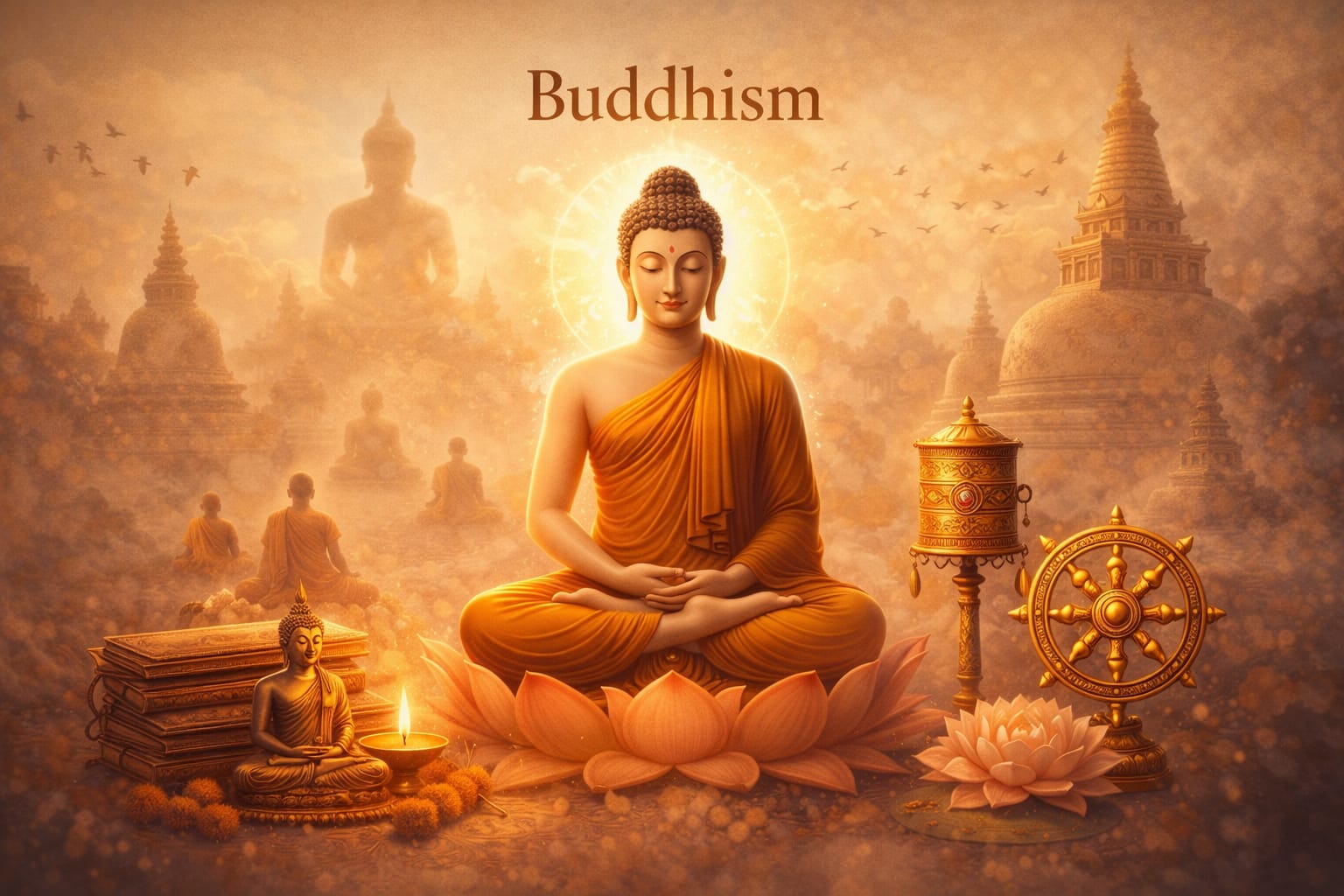
Introduction to Buddhism Spiritual Teachings
Buddhism spiritual teachings have inspired millions of people across the world for more than 2,500 years. Buddhism is not only a religion but also a deep spiritual philosophy that teaches peace, mindfulness, compassion, and wisdom. Founded by Gautama Buddha in ancient India, Buddhism focuses on understanding suffering and achieving enlightenment through self-awareness and ethical living.
Today, Buddhism continues to influence modern spirituality, meditation practices, mental wellness, and mindful living. Many people follow Buddhism spiritual teachings to reduce stress, improve focus, and live a meaningful life.
Whether someone seeks inner peace, spiritual growth, or philosophical understanding, Buddhism offers practical guidance for everyday life.
The History of Buddhism
Buddhism began in ancient India around the 5th century BCE. The founder of Buddhism, Siddhartha Gautama, was born into a royal family in Lumbini, present-day Nepal. Despite living a luxurious life, he became deeply disturbed after seeing human suffering such as sickness, old age, and death.
Siddhartha left his palace in search of truth and spiritual awakening. After years of meditation and self-discipline, he attained enlightenment under the Bodhi tree in Bodh Gaya, India. After enlightenment, he became known as Buddha, meaning “The Awakened One.”
Buddha spent the rest of his life teaching Buddhism spiritual teachings across India. His teachings spread gradually to countries such as China, Japan, Thailand, Sri Lanka, Tibet, Korea, and many parts of Southeast Asia.
Today, Buddhism is one of the major world religions with millions of followers worldwide.
Core Beliefs of Buddhism
1. The Four Noble Truths
The Four Noble Truths form the foundation of Buddhism spiritual teachings.
The Truth of Suffering
Life contains suffering, pain, sadness, and dissatisfaction.
The Cause of Suffering
Desire, attachment, and ignorance create suffering.
The End of Suffering
Suffering can end by removing attachment and ignorance.
The Path to End Suffering
Following the Noble Eightfold Path leads to enlightenment.
The Noble Eightfold Path
The Noble Eightfold Path is a guide for ethical living and spiritual growth.
Right View
Understanding reality and Buddhist teachings.
Right Intention
Developing compassion and kindness.
Right Speech
Speaking truthfully and avoiding harmful words.
Right Action
Living morally and peacefully.
Right Livelihood
Earning a living honestly.
Right Effort
Developing positive mental states.
Right Mindfulness
Practicing awareness of thoughts and actions.
Right Concentration
Developing meditation and mental focus.
These principles help followers practice Buddhism spiritual teachings in daily life.
The Concept of Karma in Buddhism
Karma is an important concept in Buddhism. Karma means actions and their consequences. Good actions create positive outcomes, while harmful actions create suffering.
Buddhism teaches that every thought, word, and action influences future experiences. Karma is not punishment but a natural law of cause and effect.
By following Buddhism spiritual teachings, individuals can create positive karma through compassion, honesty, generosity, and mindfulness.
KNOW MORE
Meditation in Buddhism
Meditation is one of the most powerful practices in Buddhism spiritual teachings. Buddhist meditation helps calm the mind, improve concentration, and develop self-awareness.
Benefits of Buddhist Meditation
- Reduces stress and anxiety
- Improves focus and concentration
- Develops emotional balance
- Increases compassion and mindfulness
- Helps achieve inner peace
Popular Buddhist Meditation Practices
Mindfulness Meditation
Observing thoughts and feelings without judgment.
Loving-Kindness Meditation
Developing compassion for all living beings.
Zen Meditation
Practicing deep concentration and awareness.
Vipassana Meditation
Understanding the true nature of reality.
Many modern wellness programs use Buddhist meditation techniques for mental health and relaxation.
Buddhism and Mindfulness
Mindfulness is one of the most popular aspects of Buddhism spiritual teachings. Mindfulness means being fully present in the current moment.
In today’s busy world, mindfulness helps people manage stress, avoid distractions, and improve emotional well-being. Buddhist mindfulness practices are widely used in therapy, healthcare, education, and business environments.
Practicing mindfulness can improve relationships, decision-making, and overall happiness.
Major Branches of Buddhism
Over time, Buddhism developed into different traditions.
Theravada Buddhism
Theravada Buddhism is one of the oldest forms of Buddhism. It is mainly practiced in Sri Lanka, Thailand, Myanmar, Laos, and Cambodia.
Mahayana Buddhism
Mahayana Buddhism emphasizes compassion and helping others achieve enlightenment. It is popular in China, Korea, Japan, and Vietnam.
Vajrayana Buddhism
Vajrayana Buddhism includes advanced spiritual practices and rituals. Tibetan Buddhism is part of Vajrayana tradition.
Each branch follows Buddhism spiritual teachings while having unique cultural and spiritual practices.
Important Buddhist Symbols
The Dharma Wheel
Represents Buddha’s teachings and the Noble Eightfold Path.
The Lotus Flower
Symbolizes purity, enlightenment, and spiritual awakening.
The Bodhi Tree
Represents the tree under which Buddha attained enlightenment.
Buddha Statues
Represent peace, wisdom, and mindfulness.
Buddhist Festivals Around the World
Vesak Festival
Vesak celebrates the birth, enlightenment, and death of Buddha. It is one of the most important Buddhist festivals.
Losar Festival
Celebrated in Tibetan Buddhism as the Buddhist New Year.
Obon Festival
A Japanese Buddhist festival honoring ancestors.
These festivals promote compassion, gratitude, and spiritual reflection.
Buddhism and Modern Life
Buddhism spiritual teachings remain highly relevant in modern society. Many people apply Buddhist principles to improve mental health, relationships, and productivity.
Buddhism in Mental Health
Psychologists and therapists often use mindfulness-based therapies inspired by Buddhist teachings.
Buddhism in Business
Mindfulness and ethical leadership practices are becoming common in workplaces.
Buddhism in Education
Schools and universities teach mindfulness to improve concentration and emotional balance.
The timeless wisdom of Buddhism helps people navigate modern challenges peacefully.
Compassion in Buddhism
Compassion is central to Buddhism spiritual teachings. Buddhists believe all living beings deserve kindness and respect.
Acts of compassion include:
- Helping others
- Practicing forgiveness
- Avoiding violence
- Protecting nature
- Supporting those in need
Compassion creates harmony within society and personal peace within individuals.
The Goal of Buddhism: Enlightenment
The ultimate goal of Buddhism is enlightenment, also called Nirvana. Enlightenment is freedom from suffering, attachment, and ignorance.
According to Buddhism spiritual teachings, enlightenment brings complete inner peace and wisdom.
Although enlightenment is a spiritual goal, Buddhism also emphasizes living ethically and mindfully in everyday life.
Buddhism and Science
Many scientists and psychologists have shown interest in Buddhism spiritual teachings because of their connection with mindfulness, consciousness, and mental well-being.
Research suggests meditation can positively affect the brain, reduce stress, and improve emotional health.
This connection between Buddhism and science has increased global interest in Buddhist practices.
Famous Buddhist Places in the World
Mahabodhi Temple
One of the holiest Buddhist sites where Buddha attained enlightenment.
Sanchi Stupa
An ancient Buddhist monument and UNESCO World Heritage Site.
Borobudur Temple
The world’s largest Buddhist temple.
Wat Arun
A famous Buddhist temple known for beautiful architecture.
How to Practice Buddhism in Daily Life
Anyone can apply Buddhism spiritual teachings in everyday life.
Simple Daily Practices
- Practice meditation daily
- Develop mindfulness
- Speak kindly
- Help others
- Avoid harmful behavior
- Be grateful
- Reduce attachment and anger
These small practices can create peace, happiness, and spiritual growth.