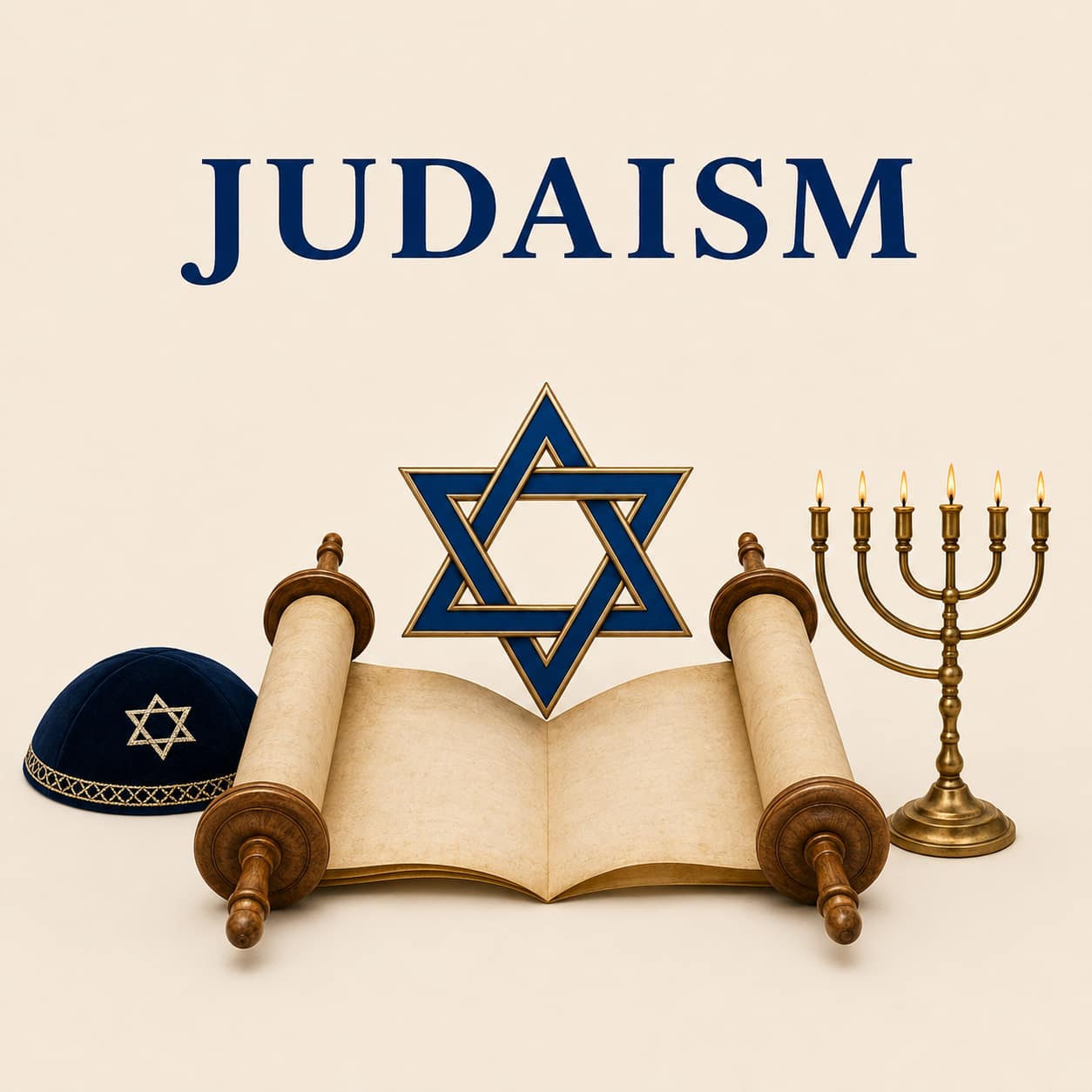
Judaism Religion
Followers of Judaism are called Jews, and their faith is deeply connected to sacred scriptures, traditions, festivals, and historical identity. The Judaism religion began in the ancient Middle East and continues to shape global culture and spirituality today.
Judaism religion is not only a religion but also a way of life. It guides worship, ethics, food habits, celebrations, family values, and community relationships.
What Is Judaism Religion?
Core teachings of Judaism religion include:
- Belief in one God
- Moral responsibility
- Justice and compassion
- Respect for life
- Prayer and worship
- Community and family values
A central teaching of Judaism religion is that humans should improve the world through kindness, honesty, and ethical living.
History of Judaism Religion
Abraham and the Covenant
According to Jewish tradition, Abraham is considered the founding patriarch of Judaism religion. God promised Abraham that his descendants would become a great nation.
Moses and the Torah
Moses is one of the most important figures in Judaism religion. Jews believe Moses led the Israelites out of Egypt and received divine laws from God on Mount Sinai.
Ancient Israel and Jerusalem
Jerusalem became the spiritual center of Judaism religion after the construction of the First Temple by King Solomon.
The Jewish people later experienced invasions, exile, and migration, leading to Jewish communities spreading across the world.
Holy Books in Judaism Religion


Sacred texts are central to Judaism religion.
Torah
The Torah is the holiest scripture in Judaism religion. It contains laws, stories, commandments, and teachings.
The Torah includes:
- Genesis
- Exodus
- Leviticus
- Numbers
- Deuteronomy
Tanakh
The Tanakh is the Hebrew Bible and includes:
- Torah
- Prophets
- Sacred writings
Talmud
The Talmud explains Jewish laws, customs, ethics, and interpretations.
Jewish Worship and Synagogues


Inside synagogues, Jews:
- Pray
- Study scriptures
- Celebrate festivals
- Attend community gatherings
A rabbi serves as a religious teacher and spiritual guide.
Prayer is performed daily and often includes Hebrew language recitations.
Jewish Festivals and Celebrations


Passover (Pesach)
Passover celebrates freedom from slavery in Egypt.
Hanukkah
Hanukkah is the Festival of Lights and includes lighting the menorah for eight nights.
Yom Kippur
Yom Kippur is a holy day focused on fasting, repentance, and prayer.
Rosh Hashanah
Rosh Hashanah marks the Jewish New Year.
Symbols of Judaism Religion


Star of David
The Star of David is the most recognized Jewish symbol.
Menorah
The menorah symbolizes divine wisdom and spiritual light.
Mezuzah
A mezuzah contains sacred verses and is placed on doorposts.
Sabbath in Judaism Religion


The Sabbath, known as Shabbat, begins Friday evening and ends Saturday evening.
During Shabbat:
- Families gather together
- Candles are lit
- Work is avoided
- Special prayers are offered
Shabbat is a sacred time for rest and spiritual reflection.
Branches of Judaism Religion
The Judaism religion has several branches.
Orthodox Judaism
Follows traditional Jewish laws strictly.
Conservative Judaism
Balances ancient traditions with modern life.
Reform Judaism
Focuses on modern interpretation and flexibility.
Reconstructionist Judaism
Views Judaism as an evolving civilization.
Judaism Religion and Israel
The Western Wall remains one of the most sacred Jewish prayer sites in the world.
Jewish Dietary Laws

Foods following these laws are called kosher.
Examples include:
- Pork is forbidden
- Meat and dairy are separated
- Certain animals are permitted
These rules help maintain religious discipline and cultural identity.
Contributions of Judaism Religion
The Judaism religion has greatly influenced:
- Ethics
- Education
- Law
- Philosophy
- Literature
- Human rights
Judaism also influenced the development of Christianity and Islam.
Jewish thinkers, scientists, and scholars contributed significantly to world civilization.
Judaism Religion in the Modern World
Today, Judaism religion is practiced worldwide, especially in:
- Israel
- United States
- Europe
- Canada
Modern Jewish communities focus on:
- Education
- Charity
- Social justice
- Cultural identity
- Family traditions
Technology and globalization have helped Jewish communities stay connected across the world.