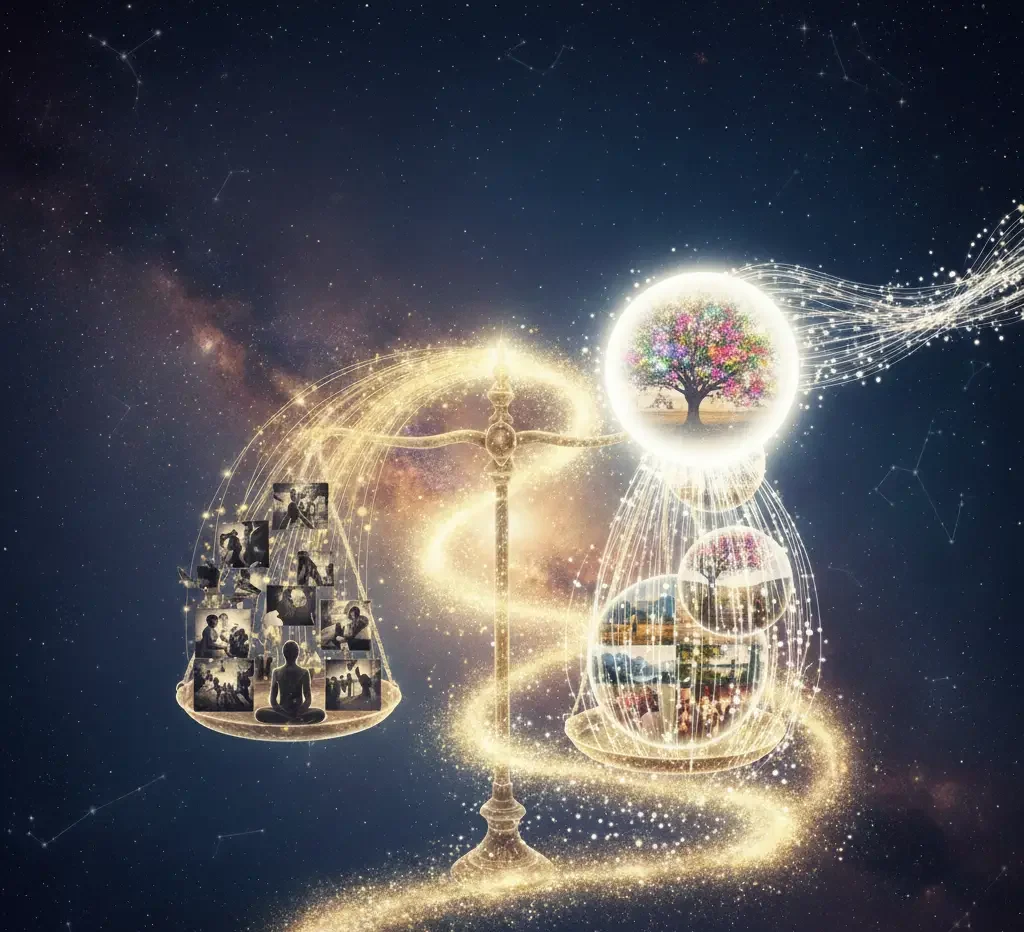
How Karma Works (Law of Action and Reaction)
Karma is the universal law of cause and effect that governs every action performed by a human being. The word “karma” comes from Sanskrit and simply means “action,” but in spiritual philosophy, it represents much more than physical deeds. Karma includes thoughts, intentions, words, and actions. Every action creates an energetic imprint that eventually returns to the doer in some form. This return may happen immediately, after years, or even in another lifetime, but it is inevitable. Karma does not work as punishment or reward; instead, it functions as a system of balance and learning designed to evolve the soul.
When a person performs an action, it leaves a subtle impression known as a samskara on the mind and soul. These impressions influence habits, behavior, and decision-making patterns. Over time, habits shape character, and character shapes destiny. This is how karma silently but powerfully controls life experiences. Many people believe karma works only in dramatic events, but in reality, it operates in everyday life—through relationships, health, success, struggles, and mental peace.
Karma also works beyond a single lifetime. If certain actions do not bear fruit in this life, they carry forward into future births. This explains why people are born into different circumstances despite similar efforts. Karma is impartial and unbiased; it does not favor anyone based on status, wealth, or power. It responds only to actions and intentions. Understanding how karma works helps a person take responsibility for life instead of blaming fate or luck. Once this awareness develops, a person becomes more conscious in thoughts and actions, gradually creating a balanced and harmonious life.
Types of Karma (Sanchita, Prarabdha, and Kriyamana)
According to Hindu philosophy, karma is divided into three main types based on time and experience: Sanchita Karma, Prarabdha Karma, and Kriyamana (Agami) Karma. These three describe us how karma works
Explanation of these are :-
Sanchita Karma is the accumulated karma of all past lives. It is like a vast storehouse where every action performed over countless lifetimes is recorded. This karma does not affect life all at once; otherwise, it would be impossible to experience. Instead, only a small portion is selected to shape each lifetime. Sanchita karma influences tendencies, fears, talents, and natural inclinations without being directly visible.
Prarabdha Karma is the portion of Sanchita karma that is activated in the present life. It determines major life factors such as birth, family, physical body, social environment, and certain unavoidable experiences. Prarabdha karma must be experienced and cannot be completely avoided. Even spiritually advanced individuals must go through their Prarabdha karma, though their awareness helps them remain unaffected internally.
Kriyamana or Agami Karma is the karma created through present actions. This is the most important type because it is fully under human control. Every decision made today—good or bad—adds to future karma. Positive actions reduce suffering and create growth, while negative actions add future challenges. Kriyamana karma decides future births and experiences.
Together, these three types explain the balance between destiny and free will. While the past shapes the present, the present actively shapes the future. Awareness of this system empowers individuals to act responsibly and consciously.
Right Ways to Follow Karma
Following the right path of karma means living consciously, responsibly, and ethically. The first and most important principle is Dharma, which means righteous conduct. Dharma varies according to role, age, and situation, but its core values—truth, compassion, and fairness—remain universal. Acting according to dharma ensures that karma leads to growth rather than suffering.
One of the most powerful teachings on karma comes from the Bhagavad Gita, where Lord Krishna explains how karma works and also describe Karma Yoga. Karma Yoga teaches performing one’s duties sincerely without attachment to results. When actions are performed without ego, greed, or expectation, they stop creating binding karma. This transforms daily work into spiritual practice.
Selfless service (seva) is another effective way to purify karma. Helping others without expecting anything in return weakens ego and reduces negative karmic effects. Even small acts of kindness, when done with pure intention, generate powerful positive karma. Equally important is controlling thoughts and speech. Negative thinking, anger, jealousy, and harsh words also create karmic impressions. Practicing mindfulness, gratitude, and meditation helps cleanse mental karma.
Accepting responsibility for one’s actions is essential. Blaming destiny or others strengthens ignorance, while acceptance leads to wisdom. Devotion and prayer also play a role by softening the intensity of karmic reactions and bringing inner clarity. Ultimately, right karma is not about fear of punishment but about conscious living. When actions align with truth and compassion, karma becomes a tool for liberation rather than bondage.
Leave a Reply